
Delay
I learned to talk much later than you might think.

One of my favorite artists of the 20th century has to be pop art denizen Roy Lichtenstein. Zoom in on a Lichtenstein painting, and you’ll see Ben Day dots. He proved that the comic strip printing technique, despite what critics of the time argued, could create genuine art; zoom out, and you’ll find it. Here, take a look at 1963’s Drowning Girl, and you can see what I mean…
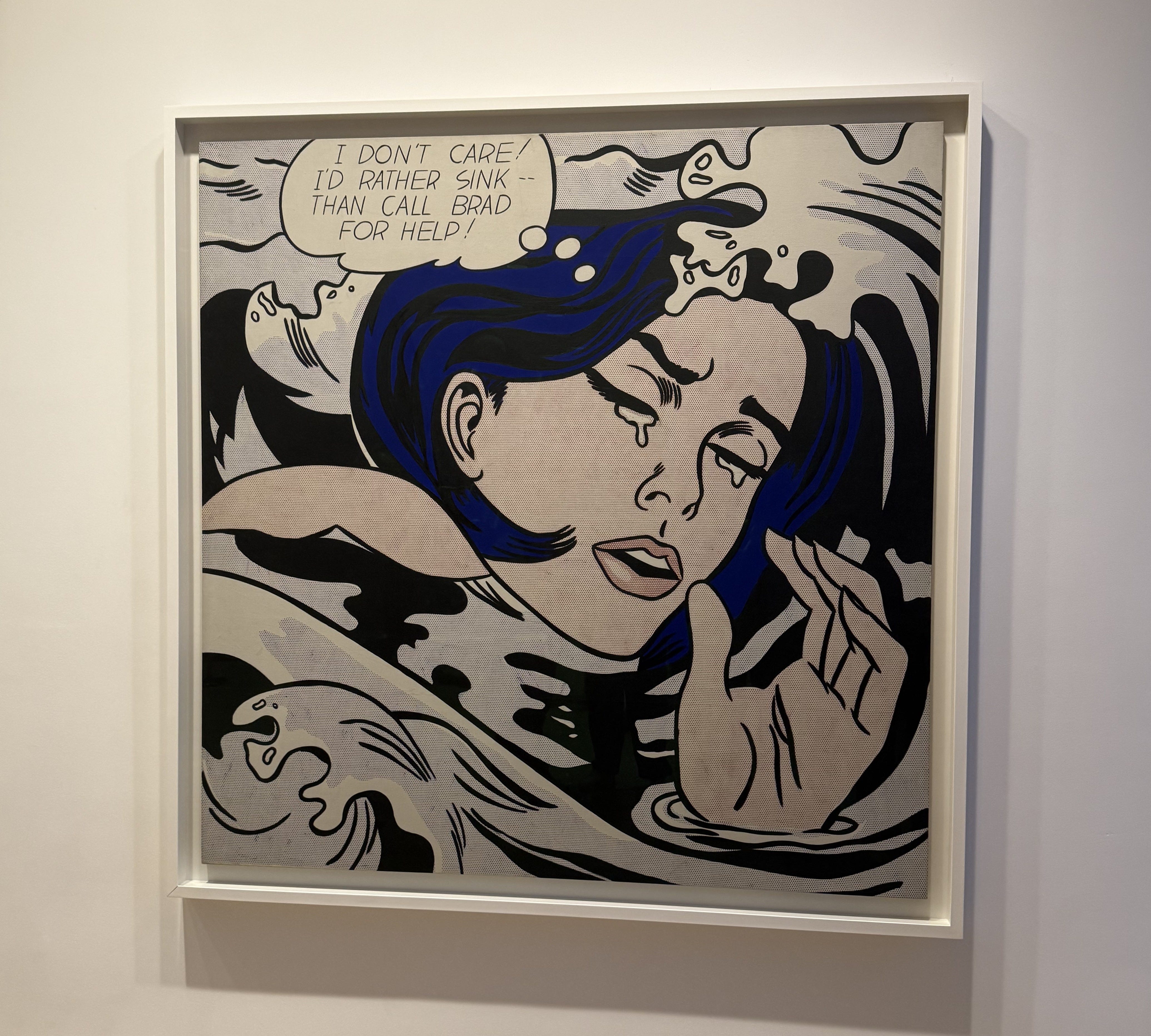
I view words as Ben Day dots. At a distance, they weave a book. On a smaller scale, they construct essays like this one, and conversations you’ll always remember. Up close, swimming in letters and the spaces between, I sometimes get to the point of agonizing in trying to arrange them just so. You know the “edit text” option on iMessage? Call me the poster child of that handy feature.
Along the way, errors inevitably surface, and I’ve come up with three primary categories:
Factual — a band was founded in 1976, not 1973
Spelling/Grammatical — it’s spelled “per se,” not “per say”
Preferential
The first two are self-explanatory, while the last of these has more of an elusive nature. Preferential errors rear their head most often in clumsy words, such as “whilst,” and repetition. Read the transcript of a typical conversation and marvel at the sheer volume of “I was like,” “she was like,” and, yes, “he was like.”
I go easy on “like,” but, if I’m in a groove while writing, there’s a chance I’ll sin by using the word “discography” twice, or refer to something as “hovering at a level” more than once. Both of these are actual examples which plagued the last piece I sent out, and I failed to correct them until later.
If I spot an error in my written work, even preferential, even if it’s a slip which the majority glide over, I have a little Chernobyl of the mind. One of the Ben Day dots got a bit smudged, and I feel like throwing my English degree in the shredder.
I’m writing about all of this because, in eight days, I turn 24. The double dozen marks two decades since I started to properly speak. Yes, I’m a fool for words, but I was bereft of them for ages.
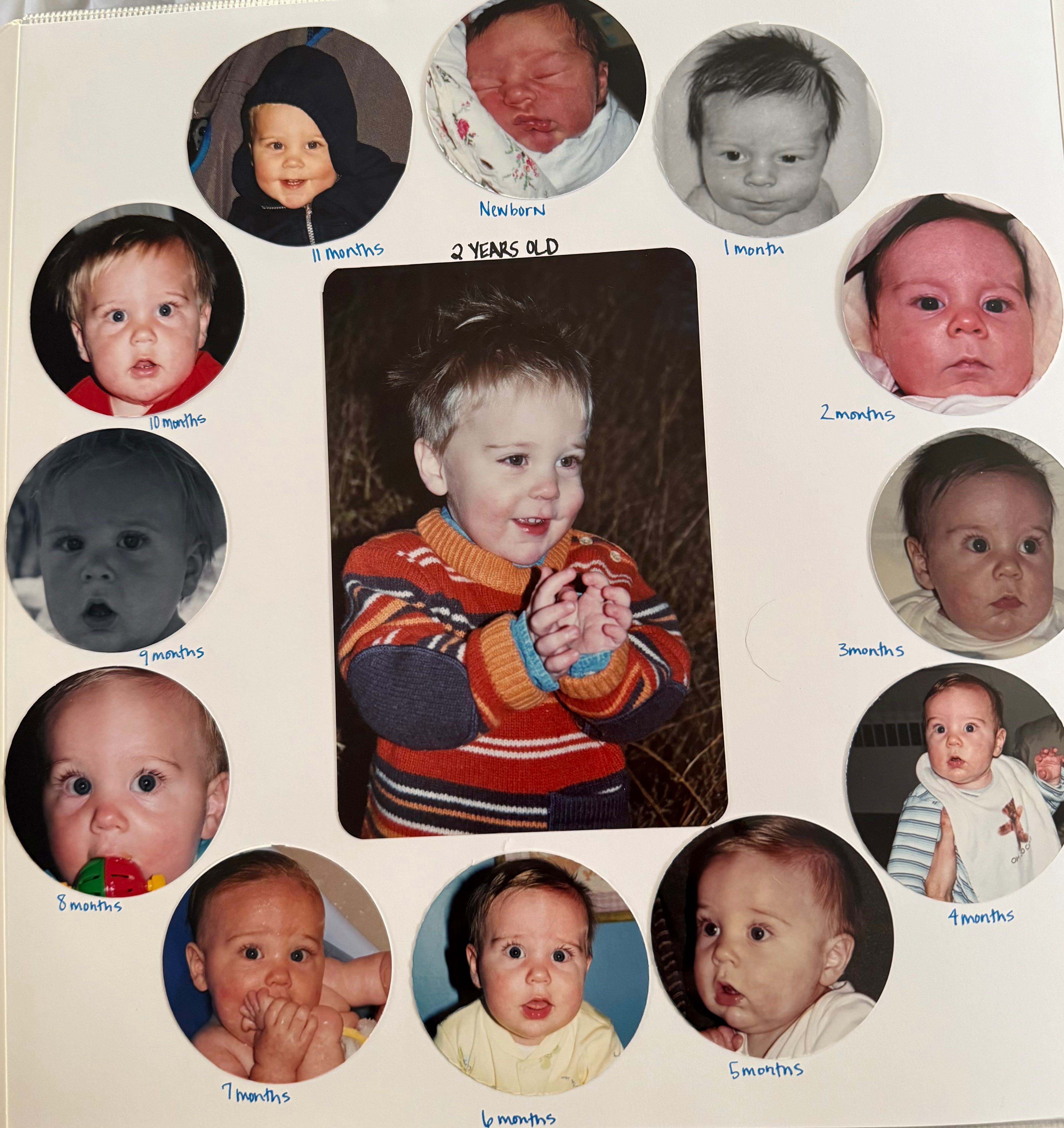
Given how much time I put into linguistic left hooks and rhetorical right hooks, you wouldn’t think I was mute for quite a while. Part of my silence stemmed from how secure I felt. There was no need to complain, to raise my voice. (I also didn’t cry very much as an infant/toddler, for the same reason.) As a quiet kid, learning to talk did not register as necessary. My parents took notice.
To illustrate how far I’ve come, check out this laminated sheet, which I was given to point at when I wanted something.
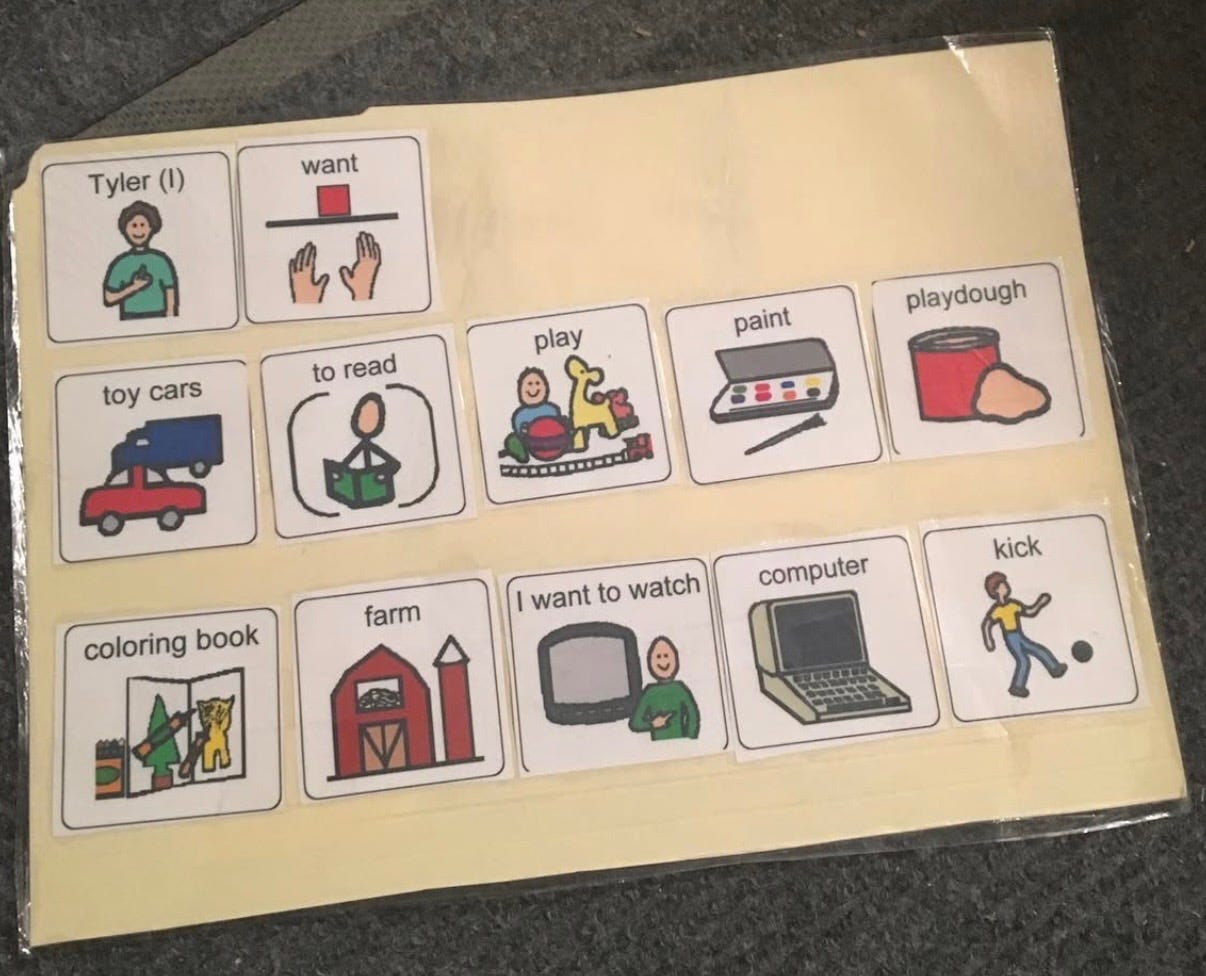
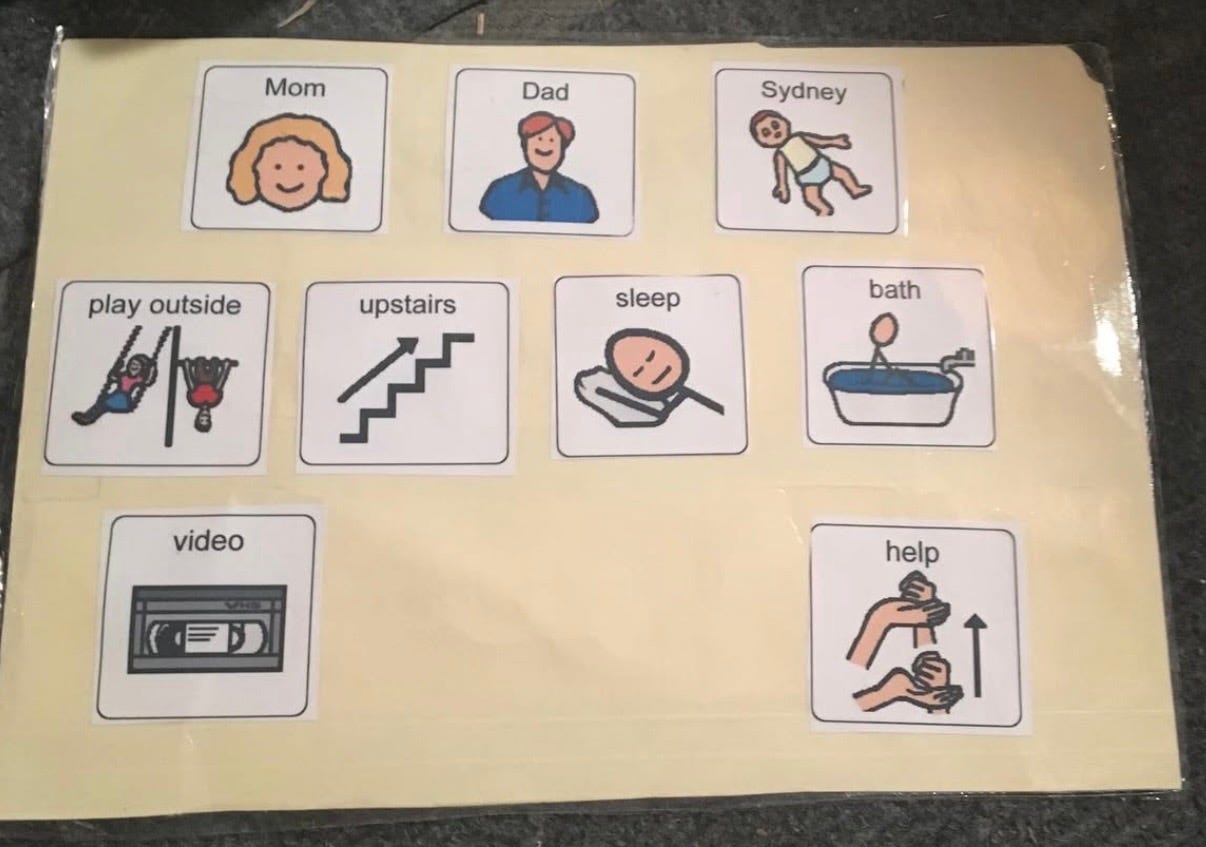
Furthermore, in case my speech never developed (a very real possibility), I began to learn elements of American Sign Language. “More,” for instance: I formed a cluster on each hand with my thumb, index and middle fingers, and tapped them together. Vocal therapy began, too, with the end goal of getting me to speak.
Not until my fourth year of life did I get the hang of talking. By the time I turned five, my speech was solid. Even so, such therapy did not conclude until fifth grade, when I was eleven. “S” and “r” sounds were a real bitch to enunciate!
With all of that in mind, it’s funny that I flipped my life into one of avid communication, of incessant reading and writing. Although my ability with a pen has been given all sorts of praise, it’s far from infallible. In a screenwriting class I took during my senior year of college, I performed fairly well, but drafts of my final assignment got torn to shreds (by both professor and peers) for being too stylized, too wooden. A little later, when I drafted a book for my independent study, my professor/mentor (McDonnell!) did not mince words when I lapsed into “inside baseball” voice — or, even worse, relied on the same, eye-twitching word a few times in a given paragraph.
Going back to massage the knots of a fresh missive can clash with the excitement, the eagerness to get a tan from the spotlight’s glow. (Case in point: my last essay, telling the tale of sharing the stage with 75% of my once-favorite band. Hello?! Fucking sick!) When there’s no editor on site to rifle through v1.0, you run the risk of falling short in tiny ways, in your own eyes and — oh, the horror! — the eyes of others.
Don’t get me wrong, the Tool article paints an awesome, vivid memory, and more current therapy has choke-chained plenty of self-critical tendencies. What you’re reading now came about as a result of another helpful remedy — viewing the big picture. (“SLOWING DOWN, TOO!!!” I hear my mom yelling in the background.)
On November 15th, I’ll enter my second decade of speaking; for that, I am grateful.
Good things come to those who wait.
This is one of my favorites. I like when you write about stuff you like but I love when you write about you. Love you💯✌🏼✌🏼